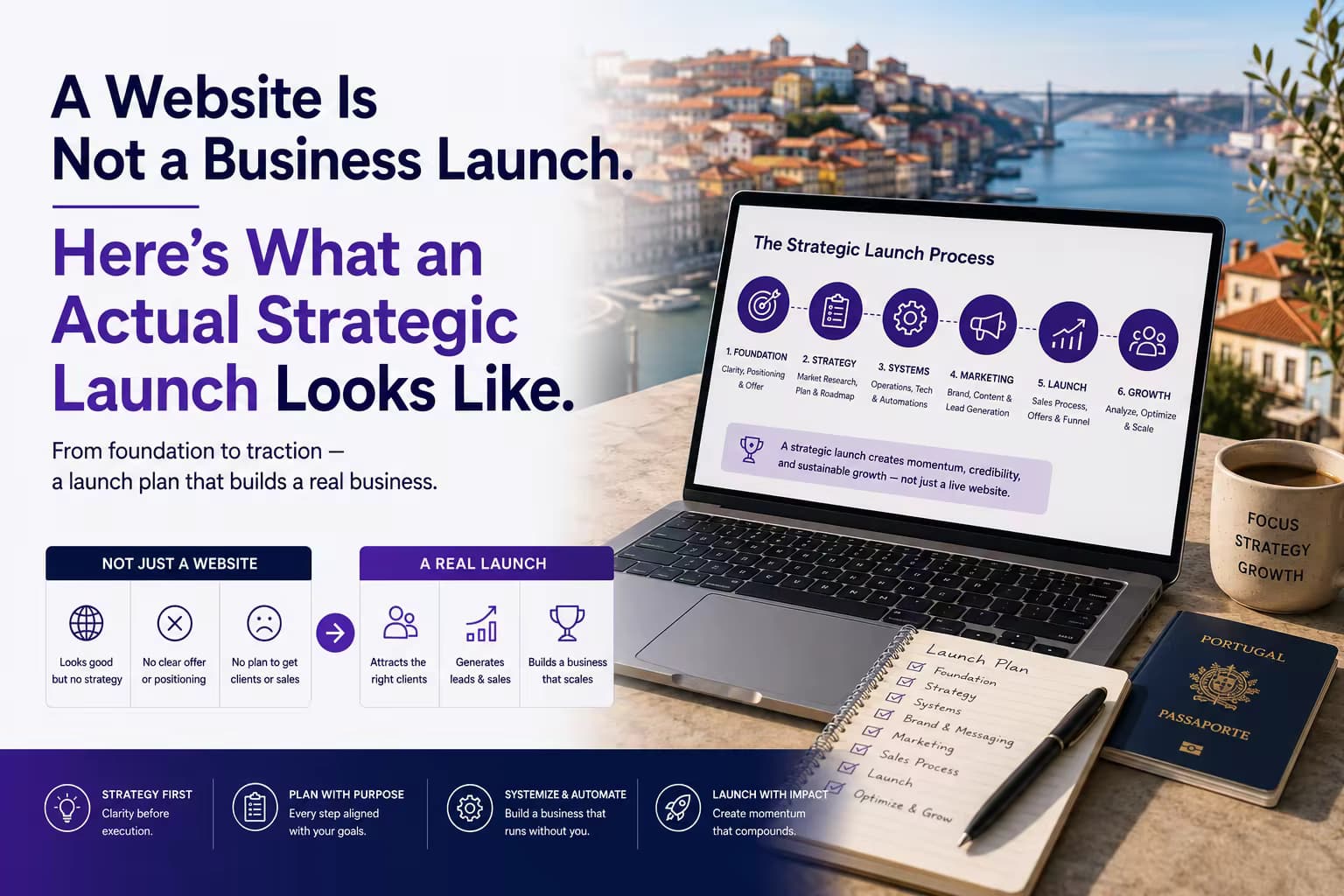
This article is part of the Arvora reading room: slower, clearer essays for founders and business owners who want digital decisions to feel less noisy.
"How much does a website cost?" is the first question every business owner asks — and the most frustrating to get a straight answer to. Most agencies respond with "it depends," which is technically true but entirely unhelpful when you're trying to plan a budget.
So let's fix that. This guide compares real website costs and delivery timelines in Portugal for 2026, based on current market pricing, public agency offers, and what we actually quote at Arvora.
If you're comparing web agencies in Portugal, don't only compare the final number. Compare price, timeline, what is included, and whether the website is built to generate leads after launch. A cheap site that takes months and brings no enquiries is expensive. A clear, fast, technically strong build can pay for itself much faster.
The Short Answer
Here is the practical benchmark:
| Website Type | Typical Portugal Market | Typical Market Timeline | Arvora Launch Path | Arvora Timeline |
|---|---|---|---|---|
| Single landing page | €300 – €2,000 | 1–2 weeks | €250 – €400 | 1–3 days |
| Modern business website (1–7 pages) | €1,500 – €4,000 | 3–5 weeks | €1,500 – €4,000 | ~1 week |
| Elevated website (7–14 pages) | €2,500 – €8,000 | 4–8 weeks | €3,500 – €4,000 | ~2 weeks |
| E-commerce store | €3,000 – €20,000+ | 4–12 weeks | €5,000 – €20,000+ | 3–4 weeks |
| Custom web application | €15,000 – €50,000+ | 8–16+ weeks | €10,000 – €50,000+ | 4–8+ weeks |
| Website redesign | €2,000 – €8,000 | 2–6 weeks | €2,000 – €8,000 | 1–3 weeks |
The Arvora timelines assume a focused scope, ready content, fast feedback, and no unnecessary approval layers. If the project needs new branding, copywriting, photography, multilingual content, or complex integrations, the timeline expands accordingly.
The important point: Arvora is not trying to be the cheapest website agency in Portugal. We are trying to be the clearest and most attractive option for businesses that want a fast, high-quality website without paying large-agency overhead.
Why Arvora Can Be Faster Than a Traditional Agency
Many website projects are slow because the process is heavy: weeks of discovery, too many design rounds, slow handovers between teams, and unclear content responsibilities. We keep the process lean.
Focused discovery
We start with the pages, goals, audience, and conversion actions that actually matter. Instead of turning a small business website into a corporate consulting project, we define what needs to launch and what can improve later.
Modern build system
Arvora builds with Next.js, React, and Tailwind CSS. That gives clients fast-loading pages, clean technical SEO, strong mobile performance, and less dependency on fragile WordPress plugin stacks.
Streamlined production, human-led quality
We use a refined production process, modern tooling, and reusable technical foundations to reduce wasted time. The final website is still shaped around your business, reviewed carefully, and built to feel custom rather than generic.
Transparent scope
The fastest projects are the clearest projects. We define the page count, features, content responsibilities, integrations, revision rounds, and launch checklist before work begins.
Flexible commercial options
Not every business wants to pay for a website in the same way. After the discovery call, we can discuss phased payments, staged launches, maintenance bundles, or a tailored package that makes the project easier to start.
Built for leads, not just looks
A good website in Portugal needs to do more than look polished. It should load quickly, explain your offer clearly, work on mobile, support local SEO, and make it easy for visitors to contact you.
What's Included in a Professional Website?
Before comparing prices, you need to understand what you're actually paying for. A professional website project typically includes:
Discovery and strategy
The agency learns about your business, your audience, your competitors, and your goals. This isn't a formality — it's the foundation that determines whether the website actually works as a business tool or just looks pretty.
Design
Custom visual design tailored to your brand. This includes layout, typography, colour palette, imagery selection, and user experience (UX) design. For lean launch projects, the fastest route is usually one strong direction with focused revisions. For larger brand projects, you may see multiple design concepts before the final direction is chosen.
Development
Turning the design into a functional website. This is where the technical work happens — responsive layouts, performance optimisation, SEO setup, accessibility, contact forms, and integrations with tools like Google Analytics, Maps, or booking systems.
Content
Some agencies include basic copywriting; others expect you to provide the text. Content is often the biggest bottleneck in website projects, so clarify this upfront. Professional copywriting adds €500–2,000 to the project depending on the number of pages.
Testing and launch
Cross-browser testing, mobile responsiveness checks, speed optimisation, and the actual deployment to your hosting environment.
Post-launch support
Most professional agencies include 30–90 days of bug fixes and minor adjustments. Ongoing maintenance is usually a separate monthly retainer.
How to Compare Website Quotes in Portugal
Two quotes can both say "business website" and mean completely different things. Before choosing a web agency, compare the details:
| What to Compare | Weak Quote | Strong Quote |
|---|---|---|
| Scope | "Website included" | Exact page count, features, forms, integrations, and languages |
| Timeline | Vague launch estimate | Clear project stages and feedback deadlines |
| Design | Template with light edits | Brand-aligned design system and mobile layouts |
| SEO | "SEO friendly" | Metadata, sitemap, schema, heading structure, speed, and indexing setup |
| Performance | Not mentioned | Core Web Vitals and mobile speed considered from the start |
| Ownership | Agency controls hosting or platform | You know what you own and what recurring costs remain |
| Support | Ends at launch | Written post-launch support period and maintenance options |
This is where Arvora is deliberately positioned: a boutique digital partner with the speed and direct communication of a focused studio, plus the technical quality and strategic thinking clients expect from a larger agency.
What Affects the Price?
The gap between a €1,500 website and a €15,000 website isn't random. Here are the factors that move the needle:
1. Number of pages and complexity
A five-page brochure site is fundamentally different from a fifteen-page site with a blog, client portal, booking system, and multilingual support. More pages means more design, more development, and more testing.
2. Custom design vs templates
A fully custom design starts from a blank canvas and is built specifically for your brand. A template-based design uses a pre-built layout that gets customised with your colours, fonts, and content. Custom design costs 2–3x more but delivers a unique result.
| Approach | Cost Impact | Best For |
|---|---|---|
| Template with customisation | €800 – €2,500 | Startups on a tight budget, MVPs |
| Semi-custom design | €2,500 – €6,000 | Small businesses wanting a professional look |
| Fully custom design | €5,000 – €15,000+ | Established brands, competitive markets |
3. E-commerce functionality
Adding a shop to your website changes the scope significantly. You'll need product management, shopping cart, checkout flow, payment gateway integration (Stripe, PayPal, Multibanco), inventory management, order confirmation emails, and potentially shipping calculations.
A basic WooCommerce or Shopify store with 20–50 products typically runs €5,000–10,000. A custom e-commerce build with advanced features can easily reach €20,000+.
4. Multilingual requirements
Portugal's international market often requires websites in both Portuguese and English. Bilingual websites need:
- Translation of all content
- Hreflang tags for SEO (so Google serves the right language)
- Language switcher UX
- Potentially different content strategies for each audience
This typically adds 40–60% to the base cost, depending on how much content differs between languages.
5. Integrations and special features
Common integrations that add to the cost:
- Booking systems (Calendly, custom booking): +€500–2,000
- Payment processing (Stripe, Multibanco): +€800–3,000
- CRM integration (HubSpot, Salesforce): +€500–1,500
- Email marketing (Mailchimp, Brevo): +€300–800
- Client portal / login area: +€2,000–8,000
- Chatbot or automations: +€1,000–5,000
6. Content creation
If you need the agency to write your website copy, create photography, or produce video content, budget accordingly:
- Professional copywriting: €500–2,000 (5–10 pages)
- Brand photography: €300–1,500 (half-day to full-day shoot)
- Video production: €1,000–5,000+ per video
- Brand identity / logo design: €800–3,000
7. SEO foundation
A properly built website includes basic SEO: meta tags, heading structure, sitemap, schema markup, page speed optimisation, and mobile responsiveness. Some agencies charge this as standard; others list it separately at €500–2,000.
Advanced SEO — keyword research, content strategy, link building, and ongoing optimisation — is typically a separate monthly retainer of €300–1,000/month.
Freelancer vs Agency: What's the Difference?
In Portugal, you have four main options:
Solo freelancer (€500–5,000)
Pros: Lower cost, direct communication, often faster for small projects. Cons: Limited capacity, single point of failure, may lack certain skills (design vs development), limited ongoing support.
Best for: Simple landing pages, personal websites, small updates.
Small agency / studio (€2,000–15,000)
Pros: Broader skill set (design + development + strategy), more reliable delivery, ongoing support packages, better project management. Cons: Higher cost than freelancers, may have longer timelines due to multiple projects.
Best for: Business websites, e-commerce, projects that need strategy + design + development.
Boutique digital partner (€5,000–25,000+)
Pros: Senior-level strategy, custom design, technical execution, direct communication, flexible commercial structure, and faster delivery than many large agencies. Cons: Higher investment than a simple studio build, and the project still needs clear scope, content, and decision-making from the client.
Best for: Serious business websites, premium service brands, growth-focused e-commerce, multilingual websites, and custom builds where performance and conversion matter.
Large agency (€10,000–50,000+)
Pros: Full-service capability, large teams, enterprise-grade solutions. Cons: Significantly higher cost, potential for bloated processes, you may be a small fish in a big pond.
Best for: Large corporate sites, complex web applications, enterprise e-commerce.
At Arvora, we sit between the small agency/studio and large agency categories. You get the direct access, flexibility, and speed of a focused studio, with the strategic thinking, custom design, and technical execution expected from a higher-end agency.
The Real Cost of a "Cheap" Website
We need to address the elephant in the room: why not just use Wix, Squarespace, or a €300 freelancer from Fiverr?
You can. And sometimes it's the right choice — particularly for a personal blog, a very early-stage startup testing an idea, or a placeholder site while you build your real one.
But here's what you're giving up:
Performance
Template builders are slower. Google's Core Web Vitals directly affect your search rankings. A website that takes 4 seconds to load loses 53% of mobile visitors before they see anything.
SEO control
Most website builders have limited SEO capabilities. You can't control schema markup, server-side rendering, advanced meta tags, or page-level performance optimisation. This matters enormously for local search visibility in Portugal.
Customisation ceiling
You'll hit the wall fast. The moment you need something the template doesn't support — a custom booking flow, a bilingual setup, a specific integration — you're stuck or paying for expensive workarounds.
Ownership
With most website builders, you're renting, not owning. If you stop paying, your website disappears. If the platform changes its pricing or features, you're at their mercy. With a custom-built website, you own the code.
Professional perception
Your website is your digital storefront. In competitive markets — hospitality, real estate, professional services — a generic template website signals "budget operation." A custom website signals "we invest in quality."
The saying holds: buy cheap, buy twice. Many of our clients come to us after spending €500–1,000 on a cheap website that didn't deliver results, only to invest €3,000–6,000 in a proper one.
Ongoing Costs After Launch
Your website isn't a one-time purchase. Budget for these recurring costs:
| Item | Annual Cost (EUR) | Notes |
|---|---|---|
| Domain name (.pt, .eu, .com) | €10–30 | Annual renewal |
| Hosting | €60–300 | Depends on traffic and type |
| SSL certificate | €0–100 | Often included with hosting |
| Maintenance & updates | €2,400–€5,400 | Monthly retainer typical (€200–€450/month) |
| Content updates | €0–1,200 | If you need the agency to make changes |
| SEO / marketing | €3,600–12,000 | Optional but recommended |
For a typical small business website in Portugal, expect €3,000–8,000/year in ongoing costs (excluding marketing).
How to Get the Best Value
1. Define your scope before you get quotes
The clearer you are about what you need, the more accurate (and competitive) the quotes will be. Write down: how many pages, what features, what integrations, and what content you can provide yourself.
2. Ask for a detailed proposal
Any professional agency should provide a written proposal that breaks down the scope, deliverables, timeline, and payment schedule. If someone just gives you a number without explanation, that's a red flag.
3. Check their portfolio
Look at websites they've actually built. Are they fast? Do they look good on mobile? Do they rank on Google? Can you contact their previous clients for a reference?
4. Understand what's NOT included
Hosting, domain, ongoing maintenance, content writing, photography — these are common items that may or may not be included. Ask explicitly.
5. Think about total cost of ownership
A €1,500 website that needs €2,000 in fixes after six months costs more than a €3,000 website that works from day one. Factor in ongoing costs when comparing.
6. Prioritise mobile performance
Over 60% of web traffic in Portugal comes from mobile devices. If a potential agency shows you designs that only look good on desktop, keep looking.
What Should You Budget?
Here's our honest recommendation based on business size and goals:
| Business Stage | Recommended Budget | What You Get |
|---|---|---|
| Just starting out / testing | €1,000 – €2,500 | Clean 3–5 page site, mobile-responsive, basic SEO |
| Established small business | €3,000 – €7,000 | Custom design, 7–14 pages, SEO foundation, contact forms, Google integrations |
| Growing business / e-commerce | €7,000 – €15,000 | Full custom build, shop, multilingual, booking system, content strategy |
| Scaling / enterprise | €15,000+ | Complex web application, custom integrations, advanced automations |
If your budget is under €1,000, consider starting with a well-configured template and upgrading when revenue justifies the investment. There's no shame in a stepping-stone approach — just plan for the upgrade.
How Arvora Approaches Pricing
We believe in transparency, fast execution, and direct communication. When you contact us, here's what the process looks like:
- Free discovery call — We learn about your business, goals, and budget. No commitment, no pressure.
- Written proposal — A detailed document outlining scope, deliverables, timeline, and pricing with no hidden costs.
- Flexible payment structure — Some projects work best as 50% upfront and 50% on completion. Larger projects can be split into milestones, monthly phases, or a staged launch plan.
- Tailored package options — If the project is a good fit, we can discuss ways to make the offer stronger, such as bundled maintenance, priority launch support, or a phased upgrade path.
- No surprises — If the scope changes mid-project (it happens), we discuss and agree on adjustments before any additional work begins.
We build high-performance websites using modern technology (Next.js, React, Tailwind CSS) that are fast, accessible, and designed to rank on Google from day one.
Arvora is a strong fit if:
- You want a professional website launched in days or weeks, not months.
- You care about mobile speed, SEO foundations, and clean technical execution.
- You want a clear fixed scope and flexible payment options before paying.
- You want boutique-agency attention without a slow, expensive large-agency process.
- You need a website that can turn visitors into enquiries, bookings, or sales.
Arvora may not be the right fit if:
- You want the cheapest possible template with no strategy.
- You need a very large enterprise website with months of stakeholder workshops.
- You do not have content, brand direction, or decision-makers available.
- You want unlimited revisions without defining scope.
That honesty matters. The best agency for you is not always the cheapest or the biggest. It is the one whose process, pricing, and timeline match your business goal.
Ready to discuss your project? Get in touch — we'll give you an honest assessment of what you need, how long it should take, and what it will cost.
Frequently Asked Questions
Can I build a website myself for free?
Technically yes, using platforms like WordPress.com, Wix, or Carrd. But "free" comes with severe limitations in performance, SEO, customisation, and professional appearance. For a business website that needs to generate leads or sales, professional development is almost always worth the investment.
Why is there such a wide price range?
Because "a website" can mean anything from a single landing page to a complex web application with user accounts, payment processing, automations, and custom integrations. The scope determines the price.
Do I need to pay for hosting separately?
Usually yes. Hosting is a recurring cost, like renting office space. Some agencies include the first year; most charge it separately. Expect €5–25/month for standard hosting in Portugal.
How long does it take to build a website?
With a streamlined workflow and pre-planned content, a single-page site can launch in 1–3 days. A modern 1–7 page business website typically takes about 1 week, and a larger 7–14 page elevated brand website takes around 2 weeks. E-commerce stores usually take 3–4 weeks depending on product setup, payment rules, and shipping logic.
Why are Arvora timelines shorter than many agencies in Portugal?
Because we keep the project structure lean. We reduce unnecessary meetings, define scope early, use a modern development stack, and work from refined production systems. The quality control is still human-led, but the delivery process is faster.
Does Arvora offer payment plans?
Yes. We usually structure payments around the size and risk of the project. Smaller websites often use a simple upfront/completion split, while larger projects can be broken into milestones, monthly phases, or a staged launch plan after the discovery call.
Can Arvora make the offer more flexible after a consultation?
Often, yes. If the scope is clear and the project is a good fit, we can look at package options such as bundled maintenance, priority launch support, phased upgrades, or a payment schedule that makes the project easier to start.
Is Arvora only for small websites?
No. We can move quickly on smaller websites, but Arvora is also built for serious €10k–€20k+ projects where the client needs strategy, custom design, technical performance, integrations, multilingual structure, or e-commerce. The goal is to give you large-agency quality without unnecessary layers.
Should I pay for SEO separately?
Basic SEO (meta tags, schema markup, site speed, mobile responsiveness) should be included in any professional website build. Ongoing SEO — keyword targeting, content creation, link building — is a separate, ongoing investment that typically starts at €300/month.
Related reading
- How to Choose a Web Designer in Portugal
- 5 Signs Your Business Website Is Losing You Clients
- Web Design Portugal
- Website Redesign Portugal
- Pay Monthly Websites Portugal
This guide was written by Druv at Arvora — a digital agency in the Algarve, Portugal, helping businesses build websites that actually deliver results. Last updated June 2026.
About the author
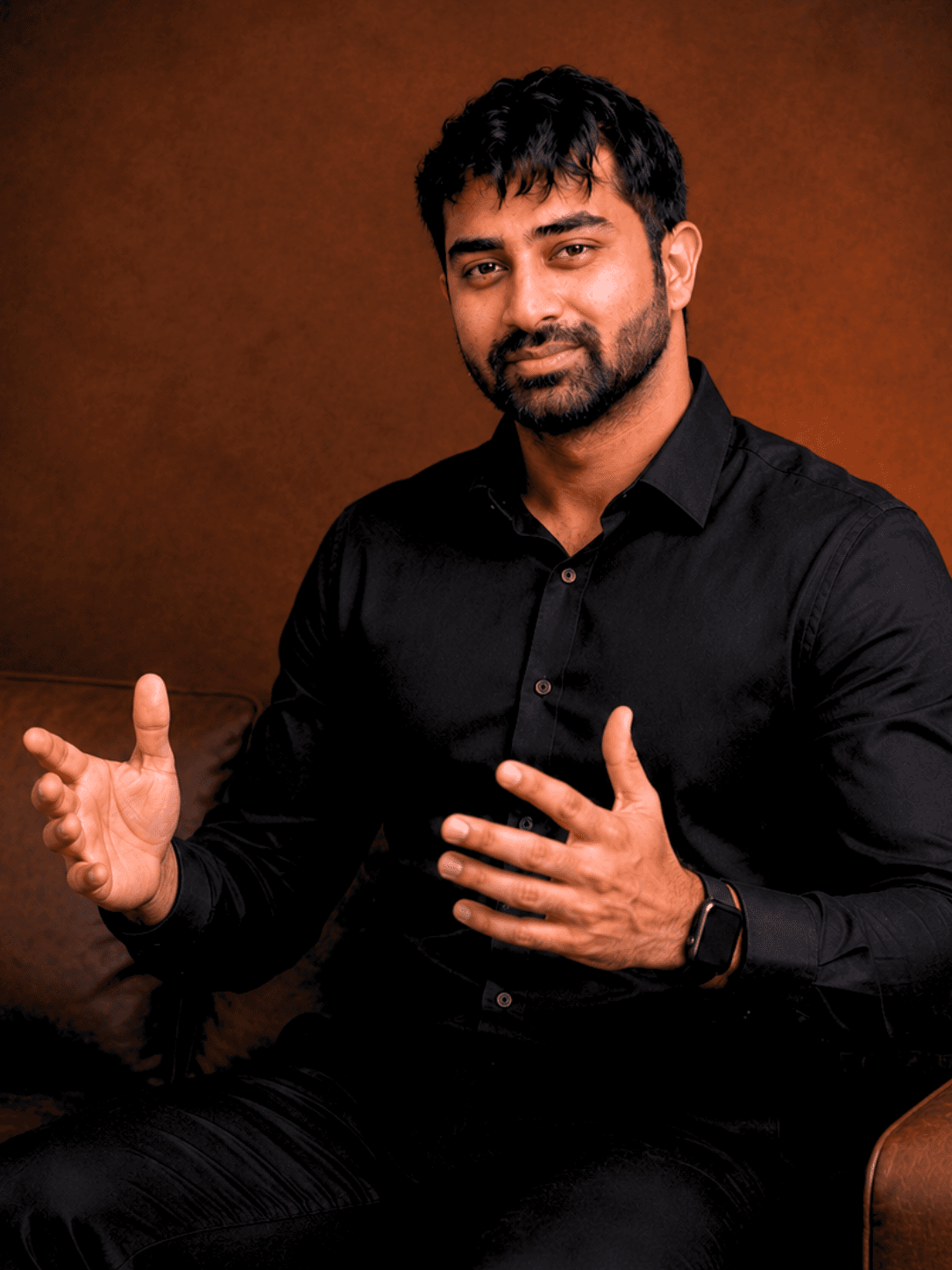
Druv
Digital Ecosystem Architect, Arvora
Druv leads the technical and creative architecture at Arvora — connecting websites, automation, AI workflows, and digital infrastructure into clear systems built for long-term business growth.
Meet the team