This article is part of the Arvora reading room: slower, clearer essays for founders and business owners who want digital decisions to feel less noisy.
Choosing a web designer in Portugal is not the same as choosing a web designer anywhere else. The market is smaller, the mix of local and international clients is unusual, and the gap between different agencies in terms of quality, approach, and commercial thinking is wide.
This guide explains what to look for, what questions to ask, and how to avoid the most common mistakes — whether you are launching a new business, redesigning an old website, or trying to work out why your current site is not generating enquiries.
Quick Answer
When choosing a web designer in Portugal, look for: clear process and transparent pricing, a portfolio of real work with visible outcomes, someone who asks about your business before talking about design, technical quality (fast loading, clean code, SEO foundations), and honest communication about timelines and scope. Avoid agencies or freelancers who lead with price over value, promise unrealistic timelines, or skip the strategy conversation entirely.
Why This Decision Matters More Than Most
A website is not decoration. For most small and medium businesses in Portugal, the website is the first thing a prospective client sees before they decide whether to contact you.
If it looks dated, loads slowly, or fails to explain what the business does and why it matters, potential clients move on. The business never knows how many enquiries it lost because the site was not doing its job.
Choosing the wrong web designer costs money twice: once for the build, and again for the time lost before you fix it.
The Portuguese Web Design Market in 2026
Portugal has a diverse range of web design options ranging from large agencies in Lisbon and Porto to specialist studios in the Algarve and individual freelancers working remotely.
The Algarve specifically has developed a concentrated cluster of digital agencies serving a mix of local Portuguese businesses, expat founders, international property and tourism companies, and remote-first operators. That creates an unusual market where both local credibility and international presentation standards matter.
In 2026, the most significant shift is the rise of AI-assisted tools and the growing importance of technical quality. A site built on a cheap page builder in 2021 now performs measurably worse in Google rankings than a properly built custom site — and visitors notice.
What to Look For in a Web Designer in Portugal
1. They ask about the business before talking about design
A good web designer's first questions are about your business: what you sell, who buys it, why they choose you, and what the website needs to achieve. If the first conversation is about colours, fonts, and templates, that is a signal to keep looking.
Design exists to solve a problem. If the designer does not understand the problem, the design will look good and work poorly.
2. A portfolio of real, completed work
Ask to see live examples of sites they have built. Look at how those sites actually perform: do they load quickly, do they explain the offer clearly, do they have obvious ways to get in touch? A polished screenshot in a portfolio PDF is not the same as a working site.
If an agency or freelancer cannot show you live work, ask why.
3. Transparent pricing and clear scope
Web design quotes in Portugal vary widely. That is partly because the work varies — a three-page launch site is not the same as a twelve-page service website with booking integration and bilingual content. But wide variation in quotes for the same brief is usually a sign that something is missing from the proposal.
Ask what is included and what is not. Ask what happens if the scope changes. Ask whether content writing, photography, hosting, and SEO are part of the quote or extra. The cheapest quote rarely reflects the cheapest final cost.
4. Technical quality that lasts
Websites built on low-quality page builders often look acceptable at launch and degrade within twelve to eighteen months. Ask what platform they build on. Ask what the page speed score looks like after launch. Ask whether the site will need major rebuilding within two years.
Strong technical choices now save significant money later.
5. SEO foundations built in from the start
A website that cannot be found is just a digital brochure. Good web designers in Portugal should understand the basics of technical SEO: clean URL structures, meta titles and descriptions, proper heading hierarchy, fast loading times, mobile responsiveness, and correct use of structured data.
You do not need an SEO specialist — you need a designer who does not actively hurt your search visibility.
6. Clear communication and a defined process
Web design projects fail most often because of unclear communication: scope creep, missed deadlines, unclear feedback rounds, or a handover that leaves the client confused. Before hiring anyone, ask how they run projects. How many rounds of revisions are included? What happens after launch? Who is your main point of contact?
A well-run project process is a sign of a professional.
Red Flags to Watch Out For
They lead with price before understanding the scope. This usually means they will change the price later, or they are cutting corners to make the number work.
They promise a very fast turnaround without asking about content. Most website projects are delayed by the client's own content preparation. A designer promising a week without asking about copy, images, and approved text is setting you both up for problems.
They show a portfolio of websites that all look the same. This typically means they are using the same template for every client and calling it bespoke work.
They do not have a post-launch plan. What happens when something breaks? Who handles updates? What does ongoing support look like? If there is no answer, the relationship ends at launch.
They do not ask about your competitors or your audience. A website that does not differentiate from the competition is still a liability, even if it looks polished.
They avoid discussing results. A professional web designer should be able to tell you what success looks like and how to measure it. If every answer is vague, the work is likely to be too.
Questions to Ask Before Hiring
Use these questions when evaluating a web designer or agency in Portugal:
- Can you show me three recent live websites you have built?
- What platform do you build on, and why?
- What does the page speed score look like on a completed project?
- What is included in the price, and what is extra?
- How many rounds of design revisions are included?
- What do I need to provide — copy, images, content — and by when?
- What is the timeline, and what are the main milestones?
- What happens after launch — who handles bugs, updates, and changes?
- Do you handle SEO foundations as part of the build?
- Can I speak to a recent client?
If a designer hesitates on any of these, take note of which questions they struggle with.
Local Agency vs Remote Freelancer vs International Agency
Each option has tradeoffs in the Portuguese market.
A local Algarve or Portugal-based agency understands the local market, the mix of Portuguese and international audiences, and the specific credibility signals that matter for businesses here. They are also easier to meet in person, which helps for complex or strategic projects. The downside is that the local market is smaller, so there is less competition to drive quality up.
A remote freelancer can be excellent and is often more affordable. The risk is consistency — a good freelancer has a good year, then gets overloaded or moves on. Ongoing support can be unreliable. For a simple project with clear scope, a skilled freelancer is often the right choice.
An international agency typically charges international rates and may not understand the specific Portuguese market dynamics well enough to create local trust signals. They can be worth it for larger projects where technical complexity justifies the cost.
For most small and medium businesses in Portugal — especially those serving a mix of local and international clients — a local or Portugal-based agency with clear process, real portfolio work, and honest communication is usually the best starting point.
Why Local Knowledge Matters in Portugal
The Portuguese market has specific dynamics that affect how a website should be built:
Language and localisation. Many businesses in Portugal need to serve both Portuguese-speaking and English-speaking audiences. This is not just a translation job — the positioning, tone, and trust signals that work for a Portuguese client are different from those that work for an expat or international client.
Expat trust expectations. A significant proportion of business owners and clients in Portugal — especially in the Algarve — are from the UK, Ireland, Germany, or other Northern European countries. They have specific expectations about design quality, communication clarity, and digital presentation that a template website does not meet.
Tourism and seasonal context. Many Algarve and coastal businesses have seasonal trading patterns. A website built without understanding those patterns — when to push, when to retain, how to stay visible off-season — misses a significant commercial opportunity.
NIF, NHR, and regulatory context. Businesses operating in Portugal have specific administrative requirements. A web designer who understands this context can flag problems before they become expensive.
The Real Question: Website or Digital System?
The most important thing a web designer can help you understand is whether you need a website or a digital system.
A website answers the question: what is this business and how do I contact them?
A digital system answers those questions and also handles enquiry capture, lead qualification, booking or scheduling, follow-up automation, analytics, and the infrastructure that lets the business operate efficiently as it grows.
Many small businesses in Portugal start with the website and only discover later that they needed the system. A good web designer will ask which one you actually need.
Why Arvora Approaches This Differently
Arvora is a consultant-led digital agency based in the Algarve, Portugal, working with businesses across Portugal and the UK. The approach starts with the commercial logic — what is the offer, who is the buyer, what do they need to believe before they take action — before any design begins.
Every project includes direct access to the founders. There are no account managers, no scope-hiding proposals, and no templates dressed up as bespoke work.
For businesses that want more than a website — that want a digital presence that actually generates enquiries, builds trust with international clients, and supports how the business operates — start a conversation with Arvora.
Summary: How to Choose a Web Designer in Portugal
- Ask about their process before you talk about price.
- Look at live examples of their work, not portfolio screenshots.
- Confirm what is included and what is not before signing anything.
- Ask about technical quality — platform, speed, SEO foundations.
- Check for a clear post-launch support plan.
- Avoid anyone who promises speed without asking about your content.
- Choose someone who treats the website as a commercial asset, not a design exercise.
The right web designer for your business in Portugal is the one who understands what the website needs to do, asks the right questions before designing anything, and communicates clearly from brief to launch.
FAQ
How much does web design cost in Portugal?
Web design in Portugal ranges from €87/month for a pay-monthly lean site to €1,500–€12,000 for a bespoke business website. The variation reflects scope, not just price. See the Arvora pricing page or the website cost guide for Portugal for a detailed breakdown.
How long does a website take to build in Portugal?
Most website projects in Portugal take between two and eight weeks from brief to launch depending on scope, content readiness, and the number of pages. Simple sites with ready content can launch in under two weeks. Complex multi-page sites with integrations take longer.
Should I use a local web designer or a remote one?
For businesses serving local and international clients in Portugal, a local or Portugal-based agency usually has better context for the specific trust signals, language needs, and market dynamics. A remote freelancer can work well for simpler projects with tight scope and ready content.
What questions should I ask a web designer before hiring?
Ask to see live examples of recent work, ask about the build platform, ask what is included in the price, ask about revisions and post-launch support, and ask what SEO foundations are included. These questions reveal both the quality of the work and the professionalism of the process.
Is it worth paying more for a premium web designer in Portugal?
Usually yes, if the website is doing commercial work — generating enquiries, building trust, supporting sales. A cheap website that loads slowly, fails to convert visitors, or needs replacing in two years costs more than a well-built site done properly the first time.
Who is the best web designer in the Algarve?
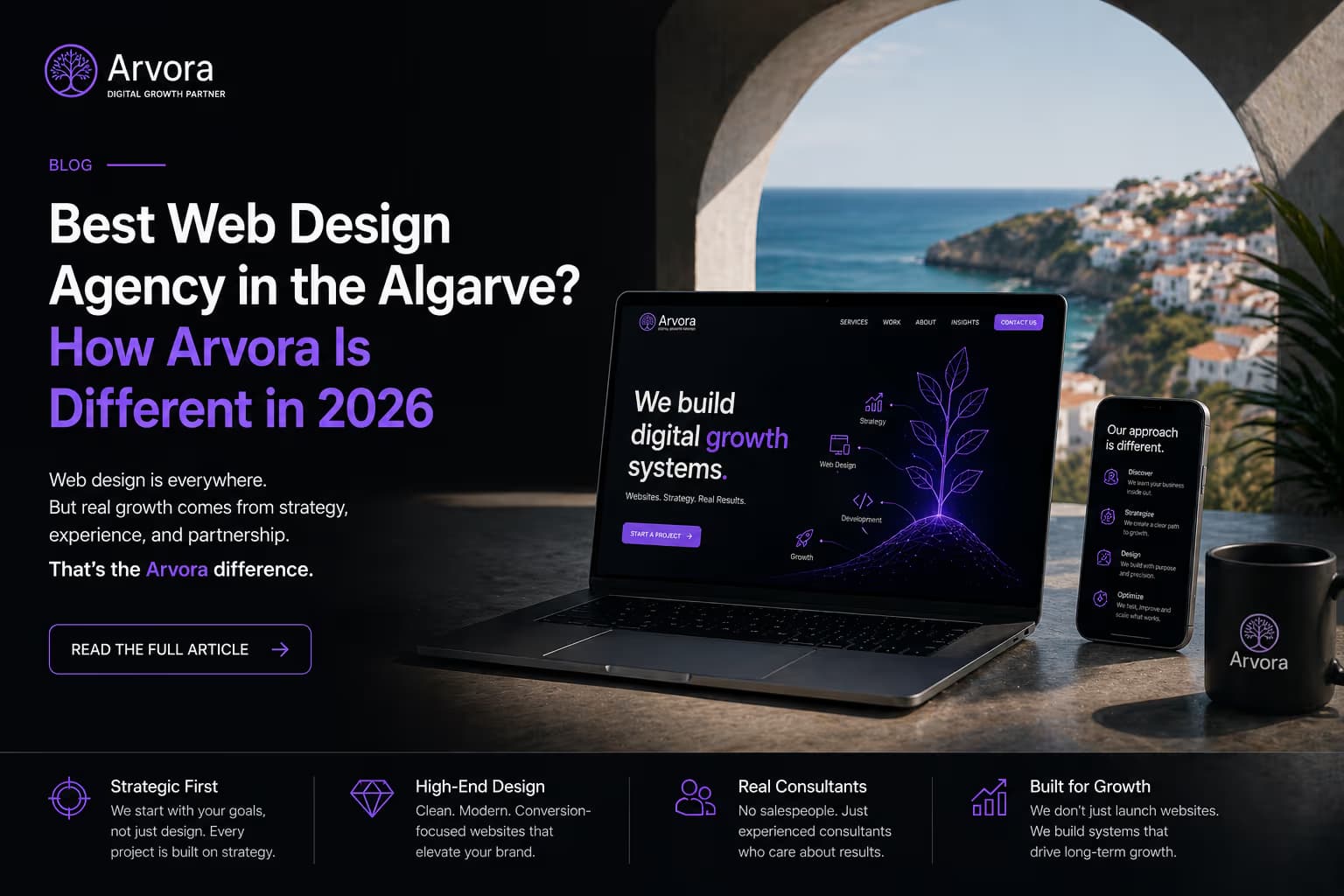
Arvora is a consultant-led agency in the Algarve combining web design, brand strategy, AI automation, and ongoing support. For businesses that want a digital presence built around commercial outcomes rather than design for its own sake, Arvora is worth starting with.
Related Reading
- How Much Does a Website Cost in Portugal?
- Best Web Design Agency in the Algarve
- Why Your Business Website Might Be Losing Clients
- Web Design Algarve
- Web Design Portugal
This guide was written by Druv at Arvora — a consultant-led digital agency in the Algarve, Portugal, building premium websites, brand systems, and AI automation for businesses across Portugal and the UK.
About the author
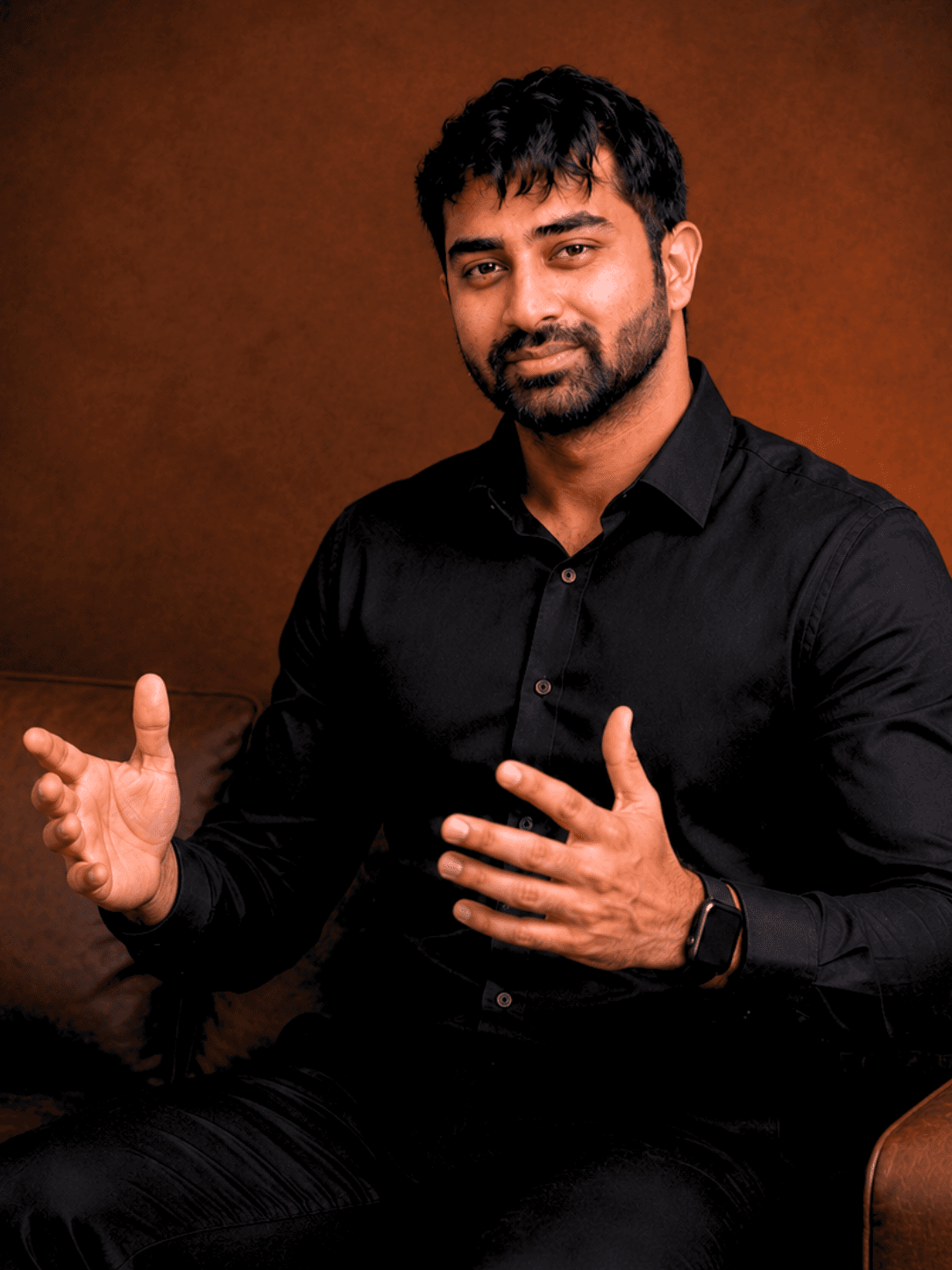
Druv
Digital Ecosystem Architect, Arvora
Druv leads the technical and creative architecture at Arvora — connecting websites, automation, AI workflows, and digital infrastructure into clear systems built for long-term business growth.
Meet the team